The conditions under which organizations plan, execute, and measure performance have shifted materially over the past several years. Volatility in global markets, accelerating digital dependency, mounting governance and sustainability expectations, and a sharper focus on execution discipline have collectively redefined what it means to perform at a high level.
These shifts are not theoretical. For organizations operating in environments where institutional maturity is a stated national priority—such as the GCC region, where Vision 2030 agendas are actively reshaping public and private sector expectations—the gap between documented capability and demonstrable execution is under growing scrutiny.
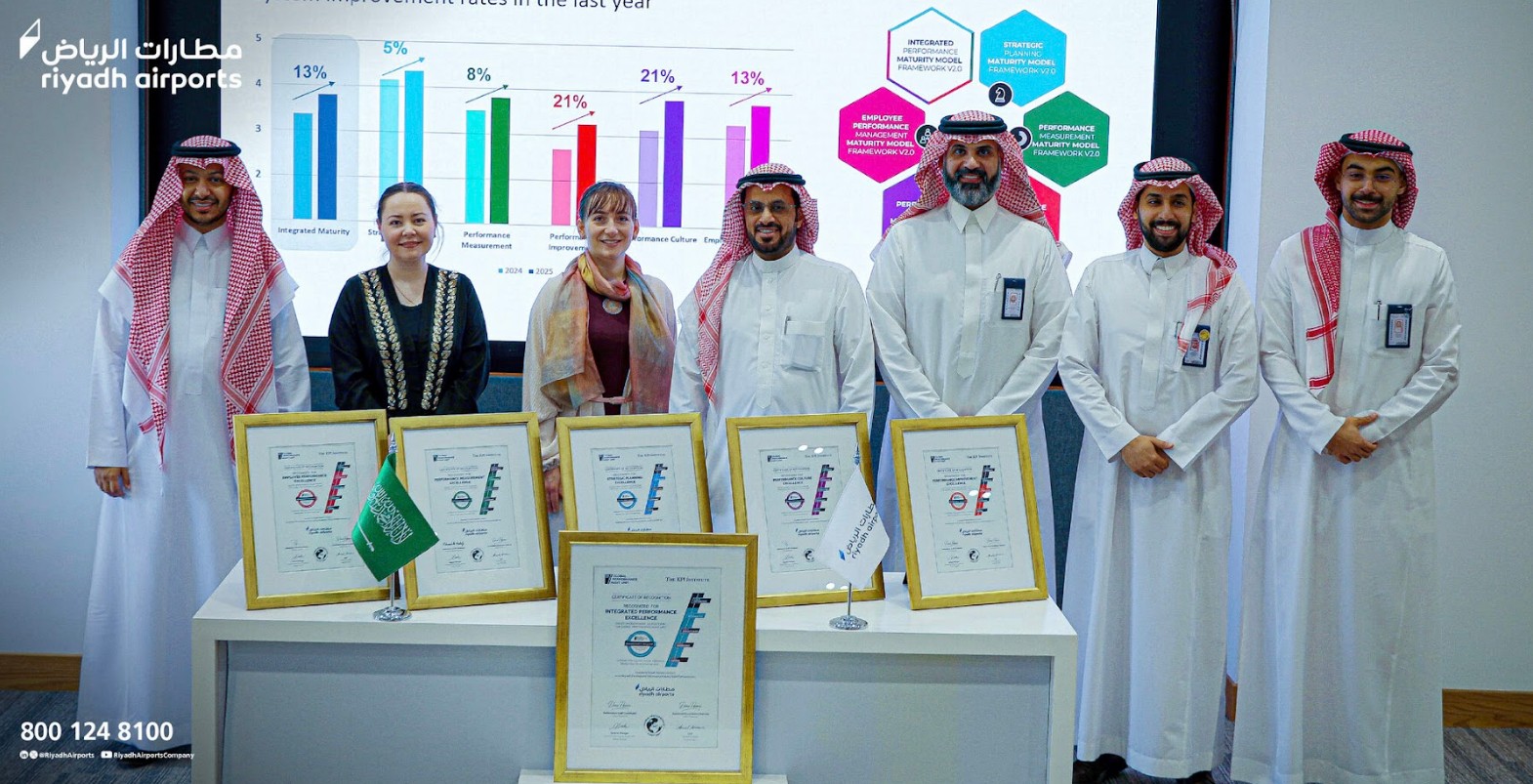
It is within this context that the standards against which organizational performance management maturity is evaluated have been recalibrated and why GPA Unit has also released an updated version of the Integrated Performance Management Maturity Framework. The update was driven by the recognition that the environment in which organizations plan, execute, and measure performance has changed significantly, and needs to be reflected in our assessment standards.
From Structural Design to Delivery Maturity
The previous version of our framework placed significant emphasis on structural design: the presence of a strategic plan, the existence of KPIs, and the documentation of cascading objectives. These remain necessary conditions for maturity—but they are no longer sufficient.
The updated framework shifts the assessment lens from structural completeness to execution and integration capability. In practice, this means we no longer assess only whether an organization has the right components in place. We assess whether those components work together—and whether they produce results.
This is a meaningful distinction. An organization may have a well-documented strategy, a comprehensive scorecard, and an annual review cycle, yet still carry significant maturity gaps if those elements operate in isolation, if initiatives are not traceable to strategic priorities, or if performance data does not actively inform decision-making.
Where We Have Raised the Bar

The updated framework introduces higher expectations across several dimensions, particularly for organizations targeting advanced or leading maturity levels. The following areas reflect the most consequential changes in what we now assess.
Digital Enablement
Our framework now treats technology integration as a structural expectation at higher maturity levels, not a differentiator. Organizations that rely on manual processes for core performance management activities—KPI tracking, objective cascading, initiative monitoring, performance reviews—face limitations in how we evaluate their maturity. We also monitor the adoption of advanced analytics and artificial intelligence as signals of organizational readiness, not merely innovation.
Execution Discipline
We now formally evaluate execution capability. This means we assess whether strategy is translated into measurable initiatives, whether those initiatives deliver quantifiable outcomes, and whether there is a clear governance structure connecting performance gaps to corrective action. Completing projects is not the same as delivering benefits—and our framework now makes that distinction explicit.
Strategic Resilience and Sustainability
Our evaluation of strategy has expanded. Beyond clarity and alignment, we now assess whether an organization’s strategic architecture can absorb disruption and adapt without losing coherence. Sustainability integration within strategic objectives is evaluated as a maturity indicator, and the formal linkage between risk management and strategic planning is assessed as a reflection of how these functions operate in high-performing organizations.
Performance Culture
This is one of the most significant changes in the updated framework. We have increased the weight given to how performance culture is experienced by employees, not just how it is documented. The rationale is straightforward: formal structures do not always reflect behavioral reality. Organizations with well-designed policies but weak cultural alignment may find that performance culture becomes a constraining factor in their overall maturity profile. We believe this adjustment produces a more honest assessment.
Continuous Performance Management
Annual appraisal cycles alone are no longer sufficient at higher maturity levels under our framework. We now assess for continuous performance management practices: regular feedback, development-focused conversations, and clear alignment between individual objectives and organizational strategy. The emphasis is on whether performance management functions as an ongoing, integrated process—not a periodic administrative event.
What This Means for Previously Assessed Organizations
Organizations that have undergone maturity assessments under previous versions of our framework should be aware that the standards have been raised. This is not a commentary on the quality of those organizations—it reflects an evolution in what we believe a credible maturity assessment should measure.
In practical terms, an organization previously assessed at a given maturity level may not achieve the same level under the updated framework. The thresholds for advanced and leading maturity have been elevated across digital enablement, execution capability, sustainability integration, risk-strategy linkage, and cultural authenticity.
We view this as a more accurate reflection of what organizational maturity requires today. For organizations that take performance management seriously—particularly those in the GCC and broader Middle East, where institutional performance is central to national strategy—this recalibration offers a clearer view of where gaps exist and where improvement efforts should be directed.
Integration Over Isolated Strength
A principle that runs through the updated framework is that performance management is a system. We assess cross-capability integration explicitly: the alignment between strategy and measurement, between measurement and improvement, between improvement and individual performance, and between all of these and the culture that sustains them. Strength in one capability does not compensate for fragmentation across the system.
Organizations that have invested heavily in one area—strategic planning, for example, or KPI design—may find that their overall maturity profile does not reflect that investment if the surrounding system is not coherent. Our framework is designed to surface precisely these kinds of gaps.
What Comes Next
The evolution of our framework tracks the evolution of what organizations are expected to deliver. As governance expectations tighten, as digital capability becomes infrastructure, and as stakeholders demand evidence of impact rather than documentation of intent, the definition of mature performance management will continue to move.
For executive leadership, the implication is clear: maturity is not a fixed status. It is a dynamic position that requires ongoing investment in integration, execution, digital capability, and cultural alignment.
Organizations seeking to understand where they stand under current expectations—or to benchmark their performance architecture against the latest standards—can engage directly with the Global Performance Audit Unit for an independent assessment.